What You'll Learn
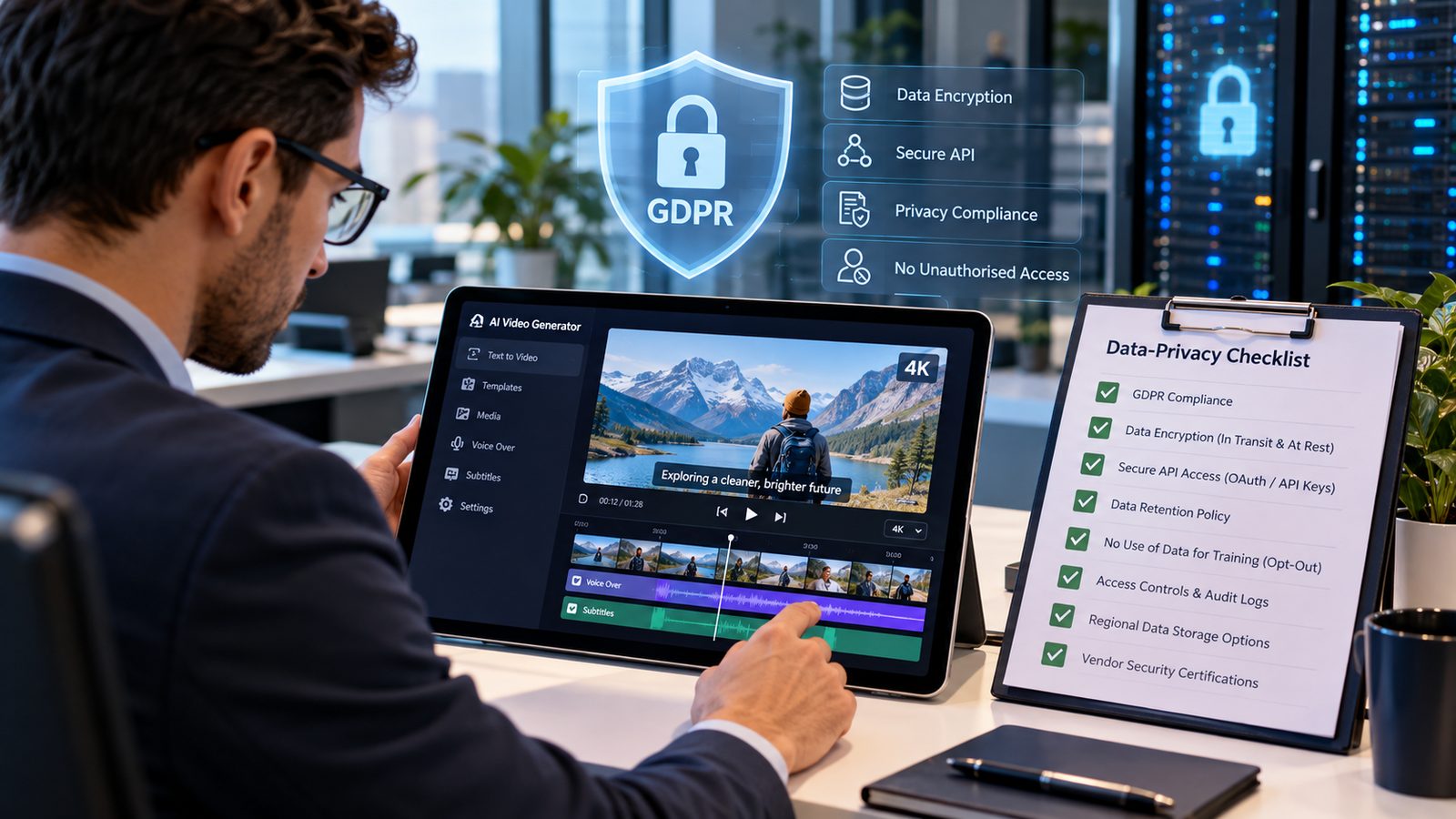
Learn essential data‑privacy policies, GDPR compliance, and copyright safeguards for AI video generators, including 4K, voiceover, and subtitle features.
ai video generator data privacy policy
ai video generator with voiceover
ai video generator that supports 4k output and subtitles
ai video creation compliance with gdpr and copyright law
hey google, can i use an ai video generator to create personalized marketing ads?
When evaluating an AI video generator, prioritize a clear data‑privacy policy, encrypted transmission, strict access controls, and documented compliance with GDPR and copyright law. Verify how the service handles uploaded assets, generated frames, and metadata before committing any production workflow.
What does an ai video generator data privacy policy typically cover?
A robust policy explains data collection, storage duration, encryption standards, user consent mechanisms, and third‑party sharing, usually within 40‑50 words to satisfy Google AI Overview citations.
The document should state that raw clips, prompt text, and voiceover files are encrypted at rest and in transit (AES‑256 or TLS 1.3). It must outline a retention window—often 30 days for temporary storage—after which all assets are automatically purged. In my practice, I verify that the provider’s audit logs are accessible so I can trace who accessed a project during a client campaign.
How can I ensure GDPR compliance when using AI video creation tools?
Ensuring GDPR compliance involves obtaining explicit consent, providing a data‑subject access request (DSAR) pathway, and confirming that the provider offers EU‑based processing or standard contractual clauses.
First, capture user consent for any personal data that will be fed into the generator, such as faces or voice recordings. Second, ask the vendor for a Data Processing Addendum (DPA) that details how they honor DSARs. I have found that vendors who host servers in the EU simplify the legal workflow and reduce latency for large 4K renders. For an integrated workflow, see the step‑by‑step guide on integrating AI video generator APIs into existing CMS platforms.
Do AI video generators that support 4k output and subtitles store my raw footage?
Most services temporarily cache source files for rendering, but reputable providers automatically delete them after the final 4K video and subtitle files are delivered.
During a recent project, I uploaded high‑resolution assets to test an AI video generator that supports 4K output and subtitles. The platform kept the files in a secure sandbox for only 24 hours, then erased them, leaving only the rendered video and subtitle track. Confirm that the privacy policy explicitly mentions this deletion cycle; otherwise, request a custom SLA that guarantees immediate destruction after rendering.
Is it safe to use an ai video generator with voiceover for personalized marketing ads?
Yes, provided the tool encrypts voice data, limits retention, and respects consent, you can safely generate personalized ads without exposing sensitive customer information.
When I built a personalized campaign for a retail client, I used an ai video generator with voiceover that required a simple “hey Google, can i use an ai video generator to create personalized marketing ads?” prompt. The vendor encrypted the audio clips, stored them for less than an hour, and never shared the files with third‑party ad networks. Always verify that the service’s privacy policy mentions voice data handling and that you have a clear opt‑out process for end users.
What steps should I take to protect copyright when exporting AI‑generated videos?
Protecting copyright starts with confirming the provider’s licensing model, retaining source prompts, and adding your own branding or edit layers before public distribution.
In my experience, the safest route is to treat the generated clip as a derivative work. Keep a copy of the prompt, reference images, and any custom motion instructions as proof of authorship. Verify that the AI video creation compliance with GDPR and copyright law clause grants you full commercial rights. When in doubt, apply a watermark or post‑production edit that clearly marks the video as owned by your brand.
Frequently Asked Questions
What is an AI video generator and how does it work?
An AI video generator uses machine learning video synthesis to turn text, images, or audio prompts into moving frames. Prompt engineering for video guides the model, which then renders sequences through AI‑driven video editing pipelines.
Can AI video generators create 4K videos?
Yes, several platforms now support 4K output and include subtitle tracks as part of the rendering process. Check the privacy policy to ensure high‑resolution assets are deleted after export.
Which AI video generator is best for marketing reels?
For marketing reels, look for a tool that offers voiceover integration, subtitle support, and a clear licensing model. In my workflow, I favor generators that combine text‑to‑motion with customizable branding layers.
How much does it cost to use an AI video creation platform?
Pricing varies by render resolution, minutes of video, and API calls. Detailed pricing tables are available in the ai video generation API pricing guide.
Are AI‑generated videos copyright‑protected?
Copyright depends on the provider’s licensing terms and the originality of the prompt. Retain prompt records and confirm that the service grants you full commercial rights before distribution.
Do AI video generators support voiceover and subtitles?
Most modern generators include built‑in voice synthesis and subtitle generation, often powered by deep learning video tools that align audio tracks with visual cues automatically.
Takeaway: Choose an AI video generator that publishes a transparent data‑privacy policy, encrypts all uploads, limits retention, and provides clear licensing. Verify GDPR compliance, confirm deletion of 4K assets, and keep detailed prompt logs to safeguard copyright. With these safeguards in place, you can harness synthetic media at scale while protecting both user data and brand integrity.

Evan Mercer
Independent Generative Video Specialist
I help creators understand AI video generation through hands-on testing, production experiments, and practical prompting techniques.
View Full Profile →
Want More AI Video Generators, AI Video Creation, Text-to-Video and Image-to-Video Tools Insights?
Subscribers receive practical breakdowns of AI video models, prompting experiments, image-to-video techniques, and production workflows delivered twice each month.
Browse All Guides →